Behind Kolkata’s Durga Puja: The Artisans and Traditions That Bring the Festival to Life
Discover the artisans of Kumartuli, traditional Durga idol-making, pandal art and the cultural traditions that make Kolkata’s Durga Puja special.
Behind Kolkata’s Durga Puja: The Artisans and Traditions That Bring the Festival to Life
Every autumn, Kolkata becomes a city of art, devotion and celebration. Streets fill with visitors, neighbourhoods create elaborate pandals, and beautifully crafted idols of Goddess Durga become the centre of the festivities.
But behind the lights, decorations and crowds lies another story. It is the story of the artisans who spend months preparing for the festival, the families who preserve traditional rituals, and the communities that work together to bring Durga Puja to life.
For travellers interested in culture and local traditions, exploring the artistic side of Durga Puja offers a different way to understand Kolkata. The experience is not only about visiting famous pandals. It is also about discovering the people, skills and traditions that make the festival possible.
Kumartuli: Where the Story Begins
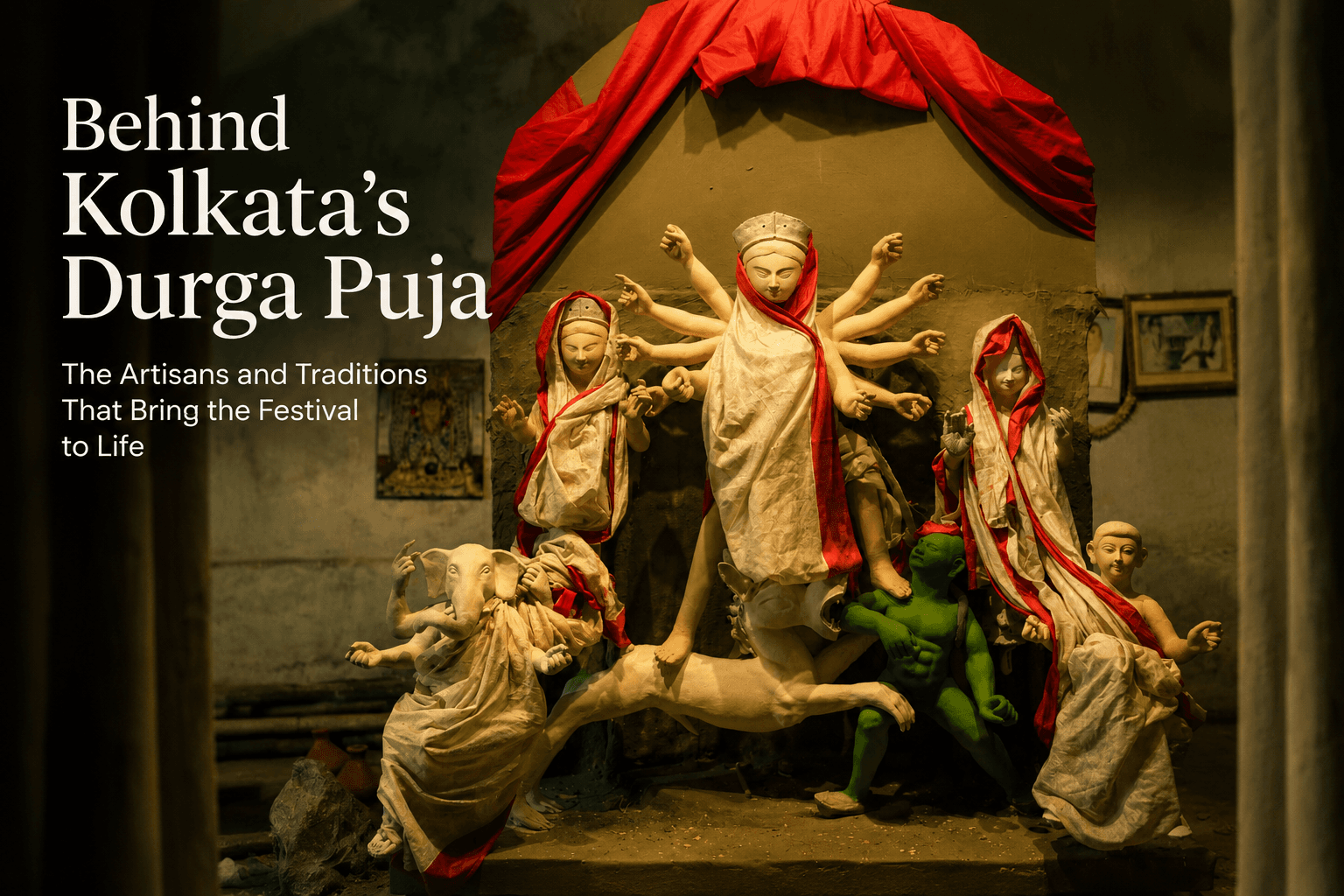
In north Kolkata, Kumartuli is one of the city's best-known traditional pottery and idol-making neighbourhoods. Its workshops are associated with generations of artisans who create clay idols for Durga Puja and other festivals.
The work begins long before the celebrations reach the streets. Artisans shape the structure of an idol, build its form with clay, allow it to dry, and carefully add details before painting and decoration.
Each stage requires patience and experience. The expressions on the goddess's face, the shape of her hands and the fine details of her clothing all contribute to the finished work.
According to West Bengal Tourism, Kumartuli is known for its traditional potter community and the artistic work of its craftsmen. The neighbourhood has also become recognised for supplying idols beyond Kolkata and India.
For visitors, Kumartuli offers an opportunity to understand the creative work behind one of Bengal's most important festivals.
The Artisans Behind Every Durga Idol
A Durga idol is more than a decorative centrepiece. It represents the skill, knowledge and artistic traditions passed from one generation to another.
Idol-making involves several stages, and different artisans may contribute to the final result. Sculptors form the body and face, while painters and decorators add colour, ornaments and finishing details.
The work becomes especially demanding as the festival approaches. Artisans must complete their commissions while maintaining the quality of their work. Their workshops reflect a combination of inherited techniques, individual creativity and changing artistic styles.
The materials and designs may differ from one workshop to another, but the care involved in creating each idol remains central to the craft.
Visiting an artisan neighbourhood can help travellers appreciate the work that often goes unnoticed once the finished idols are displayed inside festival pandals.
From Clay to a Living Tradition
One of the most meaningful aspects of Durga Puja is the relationship between the idols, the community and the natural materials used to create them.
UNESCO's description of Durga Puja in Kolkata highlights how artisans sculpt images of the goddess and her family using unfired clay. The tradition connects artistic work with worship, community participation and the seasonal return of the goddess.
The making of the idol is only one part of the wider cultural process. Families, artists, organisers, musicians and local residents all contribute to the celebration.
The festival also brings together traditional craftsmanship and contemporary design. Some pandals follow familiar artistic styles, while others use new materials, architectural ideas and social themes to create distinctive installations.
This combination of heritage and creativity helps explain why Durga Puja is much more than a religious event. It is also a major expression of Kolkata's cultural identity.
How Kolkata's Pandals Turn Art into a Public Experience
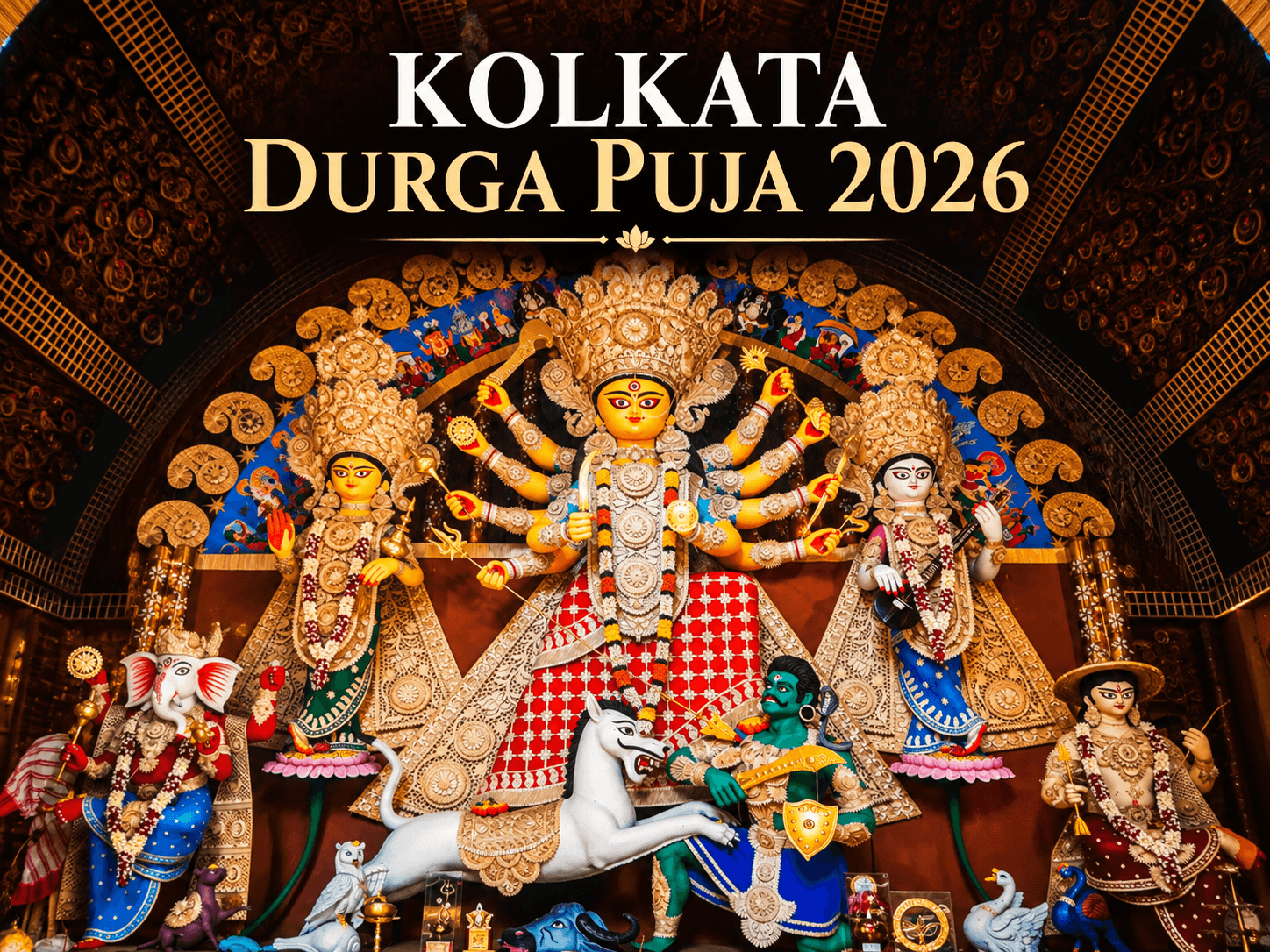
During Durga Puja, temporary pandals appear across Kolkata. These structures house the idols and become gathering places for worship, cultural activities and community celebrations.
Their designs can range from traditional temple-inspired structures to imaginative installations influenced by architecture, history, nature and contemporary social issues.
Lighting and decoration play an important role in the experience. After sunset, illuminated streets and artistic pandals transform neighbourhoods into public spaces for visitors to explore.
Many people travel between different areas to see the designs and experience the festive atmosphere. This practice is commonly known as pandal hopping.
For travellers, it is worth looking beyond the largest or most widely publicised displays. Smaller neighbourhood celebrations may also reveal how local communities organise the festival and preserve their own traditions.
Why Durga Puja Is Recognised by UNESCO
In 2021, UNESCO inscribed Durga Puja in Kolkata on its Representative List of the Intangible Cultural Heritage of Humanity.
The recognition reflects the festival's importance as a living cultural tradition. Its significance comes not only from the religious rituals but also from the artistic collaboration, public participation and community relationships that support the celebration.
Durga Puja brings together sculptors, painters, decorators, musicians, organisers, food vendors and many other contributors. The festival creates opportunities for creative expression while maintaining links with established customs.
For visitors, this recognition offers another reason to approach the celebration as a cultural experience rather than simply a series of attractions.
The people who make the festival possible are an essential part of its heritage.
Experiencing Durga Puja as a Traveller
Visitors can explore Durga Puja in several ways, depending on their interests and the amount of time available.
Explore Kumartuli
If you want to understand the artistic process, consider visiting Kumartuli and learning about its idol-making tradition. Check local access arrangements before visiting individual workshops, as working spaces may be small and busy.
Ask permission before photographing artisans, their work or private workshop areas.
Visit Different Neighbourhood Pandals
Spend time exploring more than one neighbourhood. Different organisers often have their own artistic approaches, traditions and community histories.
Choose a manageable route rather than trying to visit too many locations in one evening.
Notice the Details
Look closely at the craftsmanship, painting, lighting and decorative elements. Where appropriate, read the information displayed by organisers about the ideas behind a pandal's design.
Understanding the work involved can make each visit more meaningful.
Experience the Food and Community Atmosphere
Food stalls and local eateries are an important part of the festive environment. Trying Bengali dishes can add another dimension to the journey.
Be prepared for crowds, queues and changing travel times, especially during the main festival days.
Practical Travel Tips for Visiting Kolkata During Durga Puja
Best time to visit: Durga Puja takes place during September or October, depending on the Hindu calendar. In 2026, the main Kolkata celebration runs from October 17 to October 21.
Getting around: Plan local travel in advance. Roads near popular pandals may become crowded or subject to traffic restrictions. Check current transport and traffic advisories before setting out.
Where to stay: Choose accommodation based on your planned sightseeing areas and transport connections. Booking ahead is advisable during the festival period.
What to wear: Comfortable clothing and walking shoes are useful because visiting pandals can involve long walks and standing in queues.
Photography: Be considerate when photographing worshippers, artisans and private spaces. Follow any restrictions posted by organisers.
Crowd safety: Follow official instructions, use designated entry and exit routes, and avoid pushing into dense crowds. Keep your phone charged and agree on a meeting point if travelling with family or friends.
Accessibility: Conditions vary between pandals and streets. Visitors who need step-free access or additional assistance should check arrangements with organisers before travelling.
Respect local customs: Durga Puja is both a religious celebration and a public cultural event. Enjoy the artwork while respecting worshippers and ongoing rituals.
Final Thoughts
The beauty of Kolkata's Durga Puja is visible in its grand pandals, colourful lights and joyful streets. Yet some of its most important stories begin in quieter places, inside workshops where artisans shape clay into figures that will soon become the centre of a city's celebrations.
Kumartuli helps reveal the patience and creativity behind this tradition. The wider festival shows how craftsmanship, worship and community participation come together to create a living cultural experience.
For travellers, understanding these stories can make a visit to Kolkata more rewarding. Instead of seeing Durga Puja only as a festival to photograph, take time to appreciate the people and skills that keep its traditions alive.
Plan Your Kolkata Trip
- Discover more places through the Trawhiz Destinations guide.
- Read more travel stories in the Trawhiz Journal.
- Prepare for your next journey with Pack My Bag.
Useful Resources
- West Bengal Tourism: Kumartuli
- West Bengal Tourism: Durga Puja
- UNESCO: Durga Puja in Kolkata
- Incredible India: Durga Puja
Photo by Sourav Majumdar : https://www.pexels.com/photo/traditional-durga-idol-crafting-in-kolkata-workshop-40248742/