
Rajasthan, India
Pushkar Travel Guide: Best Places to Visit, Things to Do & Travel Tips
Plan your Pushkar trip with the best places to visit, Brahma Temple, Pushkar Lake, local markets, travel tips and a guide to the Camel Fair.
Pushkar Travel Guide: Best Places to Visit, Things to Do & Travel Tips
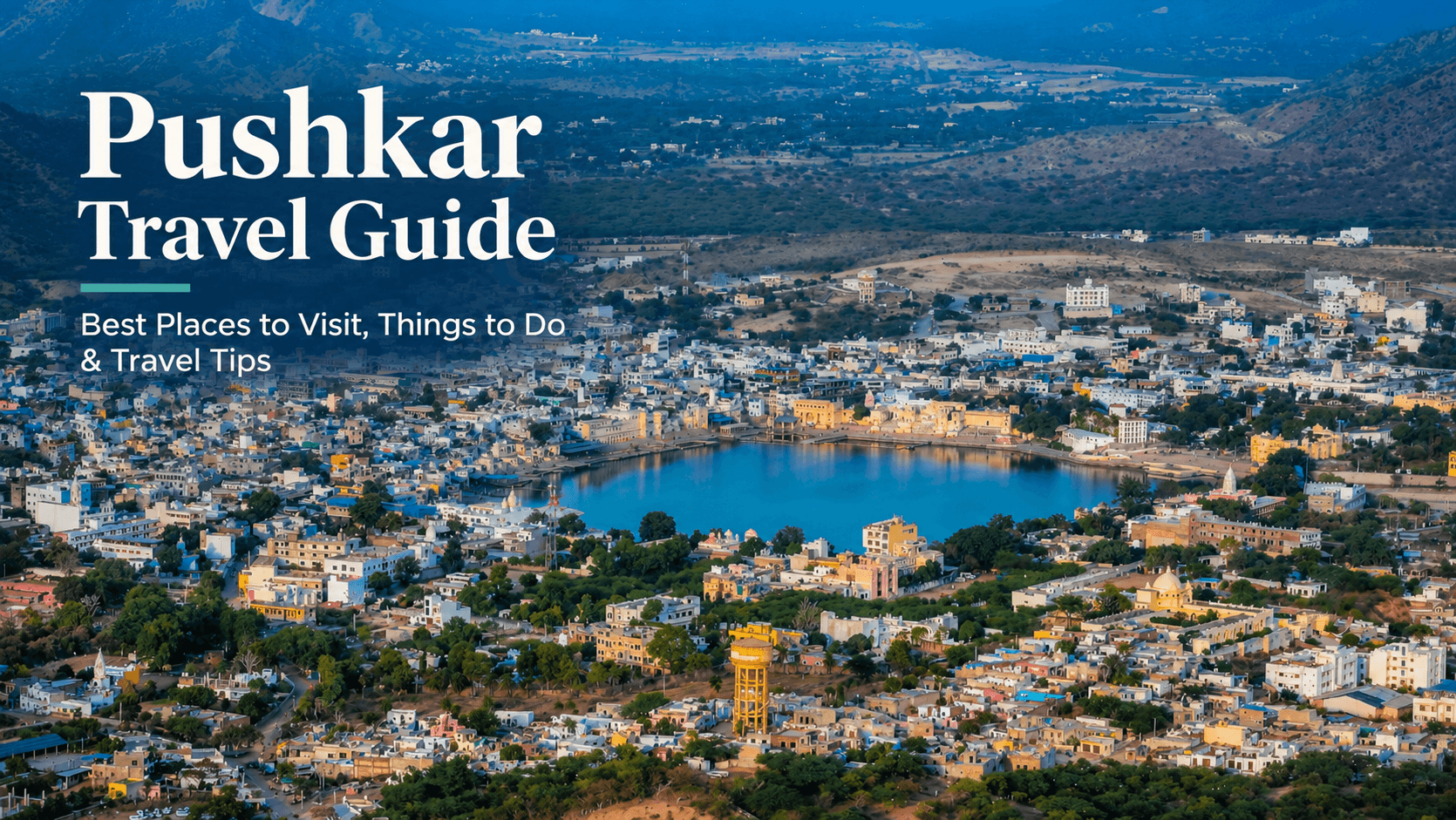
Pushkar is a small town in Rajasthan with a character all its own. Built around a sacred lake and surrounded by the Aravalli hills, it brings together ancient temples, colourful bazaars, desert landscapes, traditional food and a lively traveller culture. The town is especially known for the Brahma Temple and the annual Pushkar Camel Fair, which draws visitors from across India and abroad.
Whether you are planning a spiritual journey, a weekend escape from Jaipur or a longer Rajasthan trip, Pushkar offers a rewarding mix of culture, scenery and local experiences.
This Pushkar travel guide covers the best places to visit, things to do, the best time to travel, how to reach the town, where to stay and how to plan your itinerary.
Pushkar at a Glance
- Location: Ajmer district, Rajasthan, India
- Best time to visit: Generally October to March
- Ideal duration: One to two days; longer during the Camel Fair
- Nearest major railway connection: Ajmer Junction
- Nearest major airport: Kishangarh Airport; Jaipur International Airport is another option
- Known for: Pushkar Lake, Brahma Temple, sacred ghats, local markets and the Camel Fair
- Nearby destination: Ajmer
Travel times, transport availability, festival arrangements and temple access rules can change. Check current information before your journey.
Best Places to Visit in Pushkar
1. Pushkar Lake
Pushkar Lake is the spiritual and geographical heart of the town. Surrounded by bathing ghats and temples, the lake has an important place in Hindu traditions and pilgrimage.
The lakeside is particularly atmospheric in the early morning and around sunset, when visitors gather to pray, walk along the ghats and observe the town's religious life.
Things to do:
- Walk around the accessible lakeside areas.
- Observe the architecture of the surrounding ghats.
- Learn about the lake's significance in local religious traditions.
- Enjoy the changing light over the surrounding hills and temples.
Travel tip: Follow posted instructions at the ghats. Dress respectfully, avoid littering and do not enter restricted areas. Be cautious of unsolicited demands for donations or ritual payments; ask for clear information before agreeing to any paid service.
2. Brahma Temple
The Jagatpita Brahma Temple is one of Pushkar's most important religious landmarks. Dedicated to Lord Brahma, it is closely connected with the town's religious identity and pilgrimage traditions.
The temple's distinctive red pinnacle and devotional atmosphere make it a major stop for visitors interested in Rajasthan's sacred heritage.
Before visiting:
- Check current opening arrangements and entry rules.
- Dress respectfully and follow temple instructions.
- Be prepared for queues during weekends and religious festivals.
- Check restrictions on photography and belongings before entering.
The temple can become especially busy around Kartik Purnima and the Pushkar Fair.
3. Savitri Mata Temple
Located on Ratnagiri Hill, Savitri Mata Temple is known for its elevated views of Pushkar, the lake and the surrounding landscape.
The visit combines a religious landmark with a scenic viewpoint. Depending on your preference and physical ability, you can investigate the walking route or check whether the ropeway is operating.
Best experience: Plan your visit for early morning or late afternoon when the light is softer. Check local weather, route conditions and ropeway availability before setting out.
4. Varaha Temple
Varaha Temple is dedicated to Varaha, an incarnation of Lord Vishnu. It is one of Pushkar's notable historic temples and offers another perspective on the town's religious architecture.
It is a useful addition to a walking route that includes the lake and other central temples. Confirm access arrangements locally, as religious sites may have different visitor rules.
5. Rangji Temple
Rangji Temple is notable for its architectural character, which includes influences associated with South Indian temple design alongside features found in North Indian and Rajput traditions.
If you enjoy architecture and religious history, consider including it in your temple itinerary. Be respectful of worshippers and follow any restrictions on entry or photography.
6. Pushkar's Ghats
The ghats around Pushkar Lake are among the most memorable places to experience the town's atmosphere. These steps leading towards the water serve religious and ceremonial purposes, and different areas may have specific customs.
Walk quietly, observe from an appropriate distance and ask permission before taking close-up photographs of people.
The ghats are not simply sightseeing spots; they are active religious spaces. Visitors should follow local guidance and avoid disrupting ceremonies.
7. Pushkar Bazaar
Pushkar's markets are a lively part of the town experience. Shops and stalls sell textiles, clothing, jewellery, handicrafts, souvenirs and other goods.
The bazaar is worth exploring even if you are not planning to shop. It offers a look at the town's everyday commercial life and is a good place to find gifts.
Shopping tips:
- Compare prices before buying.
- Ask about materials and craftsmanship.
- Agree on prices before commissioning or purchasing custom-made items.
- Keep valuables secure in crowded lanes.
8. Desert Landscapes Around Pushkar
The hills and sandy landscapes surrounding Pushkar provide a change of scenery from the temple-lined centre. Some local operators offer camel rides, countryside excursions or desert-camp experiences.
Choose operators carefully, agree on the route and total price in advance, and prioritise animal welfare. Outdoor activities depend on weather, local permissions and seasonal operating arrangements.
Pushkar Camel Fair
The Pushkar Camel Fair, also called Pushkar Mela, is the town's best-known annual event. It developed around a traditional livestock fair and has grown into a major cultural gathering featuring rural traditions, markets, religious activity and visitor events.
The fair period is particularly busy, so it requires more planning than an ordinary visit.
When Is the Pushkar Camel Fair?
For 2026, Incredible India lists the fair from 17 November to 24 November 2026. Confirm the latest official schedule before travelling, as individual activities and religious observances may take place on specific dates.
What Can You Experience?
Depending on the year's programme, visitors may encounter:
- Livestock trading and traditional rural activities.
- Cultural performances and local music.
- Competitions and organised fair events.
- Market stalls selling regional products.
- Religious activity around Pushkar Lake.
- Photography opportunities showcasing Rajasthan's traditions.
Not every activity runs throughout the entire fair. Check the current programme instead of assuming a particular event will be available on your chosen day.
Tips for Visiting During the Fair
- Reserve accommodation well in advance.
- Check transport arrangements and road restrictions.
- Allow extra time to move around crowded areas.
- Carry drinking water and sun protection.
- Ask permission before photographing individuals.
- Follow animal-welfare guidance and avoid activities that distress animals.
- Keep your plans flexible during peak crowd periods.
If you prefer a quieter visit, consider travelling outside the main fair dates.
Best Things to Do in Pushkar
Pushkar is small enough to explore at a relaxed pace, but its attractions suit different kinds of travellers.
- Walk around Pushkar Lake: Explore the accessible ghats and understand the lake's religious importance.
- Visit Brahma Temple: Discover one of the town's most important pilgrimage sites.
- Explore the historic temples: Add Savitri Mata, Varaha and Rangji temples according to your interests.
- Watch the town wake up: Enjoy an early walk through the lanes before they become busy.
- Shop at the bazaar: Browse handicrafts, textiles, jewellery and souvenirs.
- Try local food: Sample regional sweets and vegetarian dishes at established eateries.
- Explore the surrounding hills: Choose a suitable viewpoint or an organised countryside excursion.
- Experience the Camel Fair: Plan around the official event programme if you want to see the annual gathering.
- Visit Ajmer: Combine Pushkar with a trip to the nearby city for a broader cultural itinerary.
Best Time to Visit Pushkar
The best time to visit Pushkar depends on whether you want comfortable sightseeing, religious experiences or the energy of the annual fair.
October to March: Comfortable Travel
These months are generally more comfortable for walking around temples, exploring the bazaar and visiting nearby attractions than the peak summer period.
November can be particularly busy because of the Camel Fair and associated religious activity. Book accommodation early if your travel dates overlap with major events.
April to June: Hot Summer Weather
Summer temperatures can become high, making outdoor sightseeing more tiring.
If you visit during this period, plan walks for early morning or late afternoon, drink water regularly and take breaks indoors during the hottest hours.
July to September: Monsoon Season
Rainfall and humidity can affect outdoor plans and road journeys. Keep your itinerary flexible and check the forecast before planning hikes or countryside excursions.
Visiting During the Camel Fair
The fair offers a distinctive cultural experience but also brings large crowds, greater demand for accommodation and possible transport changes.
Choose your dates according to your priorities: the fair for a lively event atmosphere, or another period for a more relaxed exploration of the town.
How Many Days Are Enough for Pushkar?
One full day is enough to see some of Pushkar's central attractions, but two days allow a more relaxed visit.
- One day: Explore Pushkar Lake, Brahma Temple, selected nearby temples and the bazaar.
- Two days: Add Savitri Mata Temple, more time around the ghats and a countryside or cultural experience.
- Three days: Explore Pushkar at a slower pace and include Ajmer or another nearby destination.
- During the Camel Fair: Allow extra time according to your interests and the official programme.
Avoid trying to visit every temple and viewpoint in a single day, especially during busy festival periods.
If You Are Visiting During the Camel Fair
Build your itinerary around the official event schedule rather than trying to follow a standard sightseeing plan. Set aside time for the fairgrounds, allow for crowds and transport delays, and check which events are scheduled on your dates.
How to Reach Pushkar
By Train
Ajmer Junction is the principal railway connection commonly used by visitors travelling to Pushkar. Pushkar also has a railway station, but the trains serving it may be more limited depending on your route and travel date.
Check the current railway timetable and available services before booking.
By Air
Kishangarh Airport and Jaipur International Airport are possible arrival points, depending on available flights and your onward travel plans.
Compare the complete journey, including ground transport, rather than choosing an airport based only on flight price. Confirm current flight routes and road-transfer options before travelling.
By Road
Pushkar is connected by road with Ajmer and other destinations in Rajasthan. Buses, taxis and private vehicles are common ways to reach the town.
During the Camel Fair, check for traffic diversions, parking arrangements and restrictions near busy areas. Travel times can vary with traffic and weather.
Getting Around Pushkar
Much of central Pushkar can be explored on foot, particularly if you stay close to the lake and bazaar. Walking also makes it easier to explore the narrow lanes at your own pace.
For longer distances, local auto-rickshaws, taxis or other locally available services may be useful.
Before booking a vehicle:
- Agree on the fare or confirm the booking price.
- Clarify whether waiting time is included.
- Check the return arrangement for out-of-town excursions.
- Allow extra time during the Camel Fair.
Some lanes can be narrow or crowded, so follow local directions and avoid driving into restricted areas.
Where to Stay in Pushkar
Choose accommodation according to your itinerary and preferred atmosphere.
- Near Pushkar Lake: Convenient for exploring the ghats, temples and central bazaar on foot.
- Near the outer town or main roads: May be more practical for visitors travelling by car or planning excursions.
- Guesthouses and budget stays: Worth comparing for short visits and flexible itineraries.
- Hotels and heritage-style stays: Suitable for travellers who prefer additional facilities or a more private setting.
- Camps during the fair: Seasonal options may be available, but check facilities, location, safety and cancellation conditions carefully.
During the Camel Fair, prices and availability can change substantially. Confirm the exact location of your stay and how you will reach the main attractions.
What to Eat in Pushkar
Pushkar has a strong vegetarian food culture, with cafés, snack stalls and restaurants serving Indian and international dishes.
Some local favourites and options to look for include:
- Malpua: A traditional sweet often associated with Rajasthan.
- Kachori and samosa: Popular savoury snacks.
- Dal, roti and regional vegetarian meals: Common choices for a filling lunch or dinner.
- Lassi and other refreshments: Useful for a break while exploring the town.
Choose clean, busy establishments with good food-handling practices. If you have dietary restrictions, confirm ingredients and preparation methods before ordering.
Places to Visit Near Pushkar
Ajmer
Ajmer is the most convenient major destination to combine with Pushkar. It has its own important religious and historic landmarks, including Ajmer Sharif Dargah, and offers a different perspective on the region's cultural heritage.
Check the latest visitor arrangements and local guidance before visiting religious sites.
Kishangarh
Kishangarh can be considered as an additional excursion depending on your transport and interests. Confirm the attractions you want to visit, their accessibility and the time needed for the journey before adding it to your plan.
Jaipur
Jaipur is a longer extension for travellers building a wider Rajasthan itinerary. Its historic architecture, markets, forts and museums can complement Pushkar, but allow enough time for the road journey and sightseeing rather than attempting both destinations in a rushed day.
Final Thoughts
Pushkar is more than a destination for the annual Camel Fair. Its sacred lake, historic temples, lively bazaar and surrounding Aravalli landscape make it a worthwhile stop on a Rajasthan journey.
Plan enough time to explore at a comfortable pace, respect the town's religious traditions and verify current transport and event information before travelling. Whether you visit during the fair or choose a quieter season, Pushkar offers a memorable introduction to Rajasthan's cultural heritage.